Personal Reflection on Immigration and HRI
By M. Zulayka Santiago, Senior Program Director, MDC
For seven years of my childhood, we lived in Kenner, Louisiana, where my mother worked as an alternator mechanic, a hotel chambermaid (back when it was still called that), and as a nanny/housekeeper for an attorney who had five adopted children. As a single mother, she took whatever dignified job she could (often two at a time) to provide for my sister and me. If HR1 were in effect during that precarious time in our lives, my mother would not have been able to sustain our household, given that it was programs like Medicaid and SNAP that helped stretch her very limited budget farther.
While my mother literally worked her fingers to the bone (she now suffers from rheumatoid arthritis), we also relied on basic public services to be able to care for ourselves. My sister and I attended public school with free breakfast and lunch programs, Medicaid was our path to healthcare, and we received food stamps. I have distinct memories of the amazing fritters that my mother would make from the boxed mashed potatoes and block cheese we would receive from the US government. There were many challenges during that time, but my mother’s creativity, determination and love made our home a haven.
Of course, government aid was only a part of the support we received that allowed us to survive and thrive. We also relied heavily on the care of nearby family, and the strong church community we belonged to, which was made up of other immigrant families trying to make a life in their new country. The great distinction between us and many of the other families at our church was that my mother and sister had green cards (they were both born in the Dominican Republic) and I was a US citizen, having been born in Puerto Rico—a colonial possession of the US, which means that citizenship comes with many conditions and limitations—but that’s a story for another time.
Today, many immigrants still rely heavily on government services to be able to show up for their families and their communities. Yes, they may ‘take’ from the US by enrolling their children in public schools and relying on public health systems to ensure they are healthy and strong. However, it is clear to me (and many others) that what immigrant families contribute to our society far outweighs anything that they may take. This is not just my biased hyperbole; the data tell a very similar story. Like my mother, many of the immigrants in my community came to this country with a laser focus on doing the best that they can to provide for their children and to send money back to the families they left behind. They came and still come with dreams of freedom and possibility.
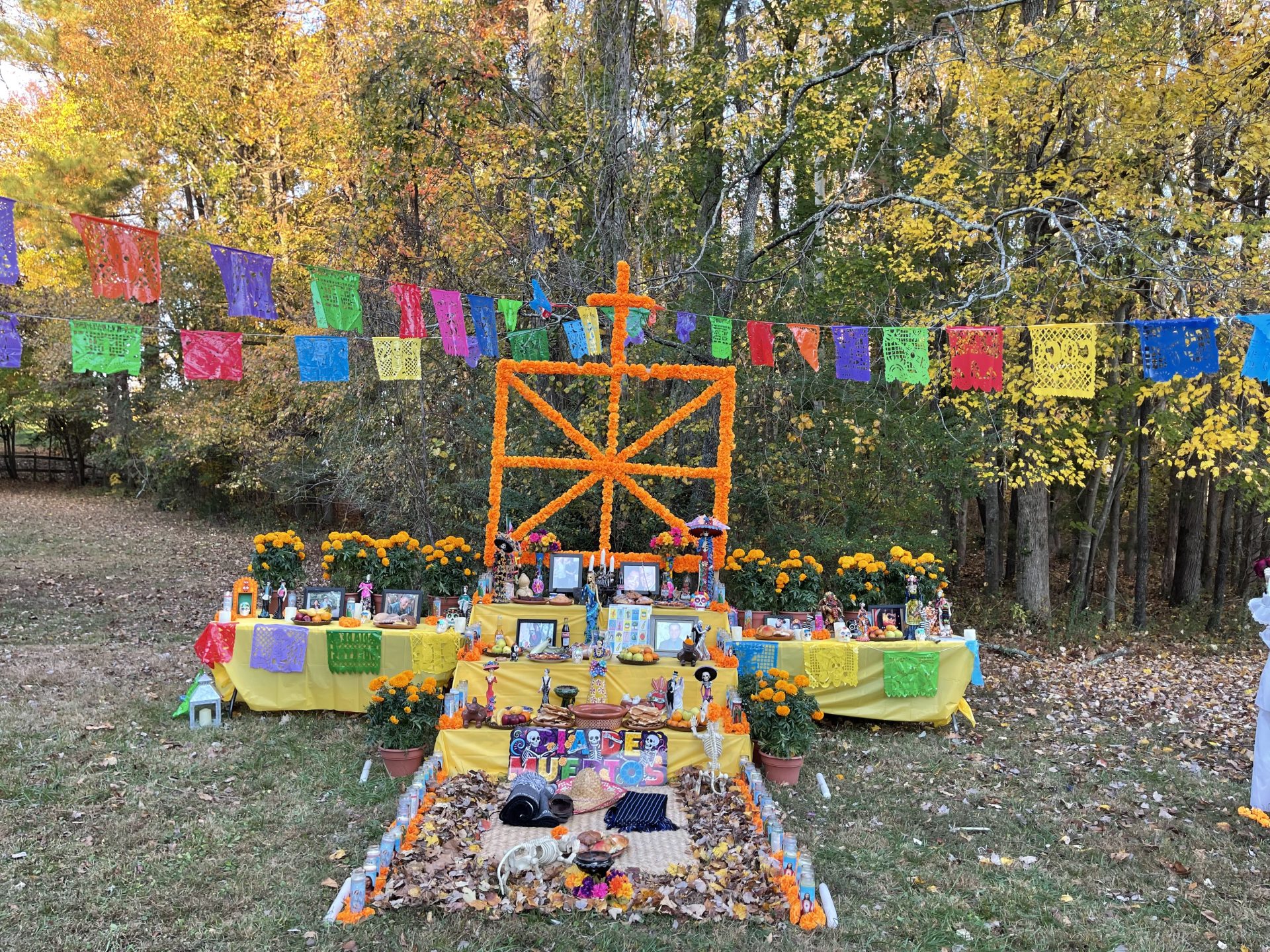
As the fall season arrives in North Carolina, the place I now call home, I think of one of my favorite community celebrations, Dia de los Muertos. This is not a cultural tradition I grew up with, but one that I learned to love from my Mexican neighbors. Recently I was visiting with a dear friend of mine who has been instrumental in organizing and hosting large community celebrations in honor of her sister, who died a few years ago, and in memory of all our ancestors. After almost 20 years of hosting this event, she shared that she wasn’t sure if it would take place this year. Immigration raids have increased dramatically in our state and across the nation. While connection to culture has been such a source of strength and sustenance for many immigrant families, fear of being targeted by Immigration and Customs Enforcement has relegated many people to their homes, leaving only for work and the basic necessities. This is a tremendous loss for them, but it is also a tremendous loss for us. In our highly polarized world where we too often turn to violence, I pray for us to remember how deeply interconnected we are. My suffering is your suffering, but the good news is that my celebration can also be your celebration – if only we create the conditions that allow it to be so.


