H.R. 1 slashes the South’s safety net and threatens regional prosperity
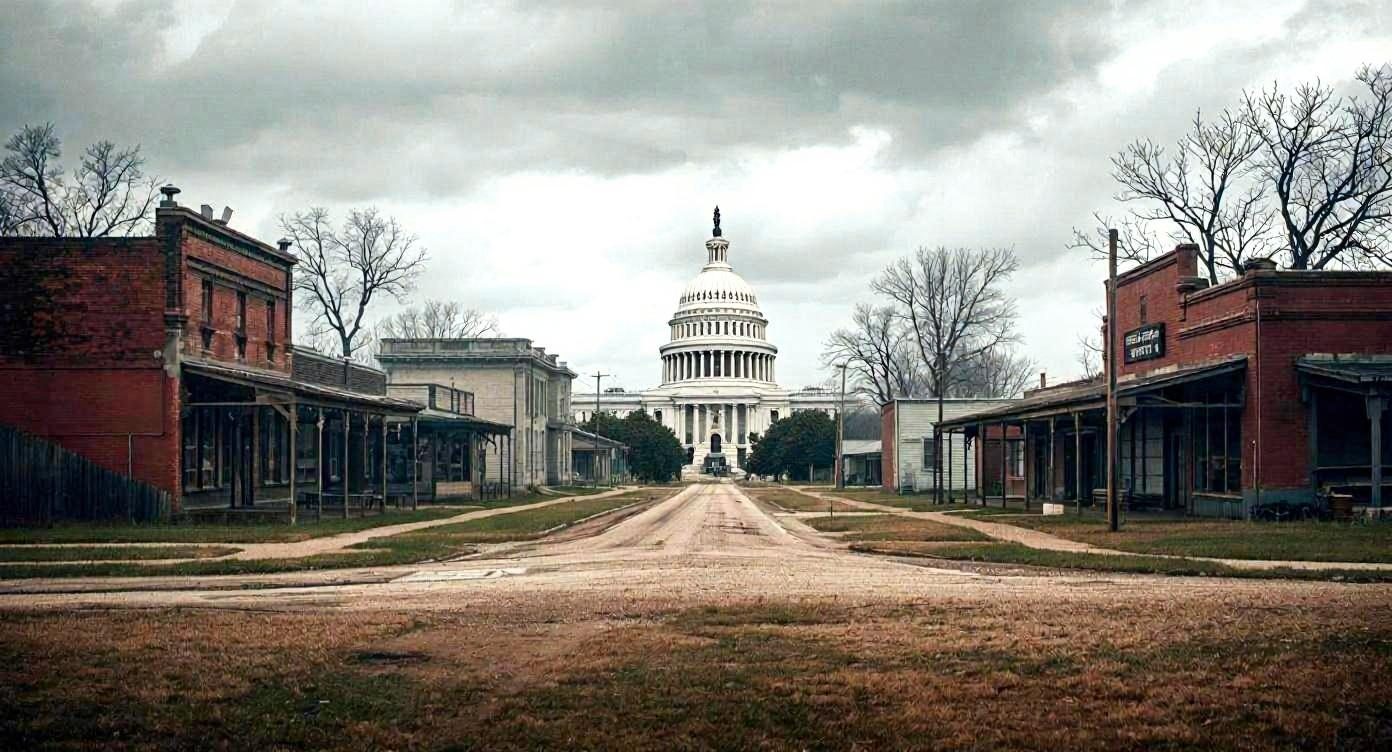
“I love America more than any other country in the world and, exactly for this reason, I insist on the right to criticize her perpetually.” – James Baldwin.
It’s not surprising the South is one of the fastest-growing regions in the U.S., given its food, storytellers, musicians, sense of community, and business hubs. Yet, the South also faces many challenges – rural Southerners live farther away on average from grocery stores and hospitals, Southern states spend less per pupil on education than other states, and Southern workers have fewer protections as states prioritize corporate interests over workers’ rights.
MDC strengthens capacity, fosters collaboration, and builds influence for an equitable and inclusive South. The federal government’s recent budget, H.R. 1, or the grossly misnamed “One Big, Beautiful Bill”, poses a severe threat to our vision for a thriving South. While we won’t know the full extent of the bill’s impacts for years, the changes H.R. 1 makes to the social safety net will exacerbate existing inequalities and make Southerners, particularly Southerners of color, sicker, poorer, and less educated.
In order to ensure that local communities and partners have access to the information they need to prepare and advocate, MDC has produced five briefs outlining the impact of parts of H.R.1 in the South, and how Southern communities are coming together and pushing back. They will be released throughout November and can be downloaded here as they become available:
For a general overview of the impacts of the changes in the brief, please read more below.
Impact of Medicaid changes
The severe cuts to Medicaid will leave millions in the coverage gap and make health care even less accessible and affordable in a region that already has some of the worst health outcomes in the nation. The work requirements and funding changes will make it difficult or impossible for Southerners, particularly Southerners of color, to access care. State branding of Medicaid such as South Carolina’s Healthy Connections and Tennessee’s TennCare may differ, but the impacts of the bill will still apply regardless of the name.
- Millions of Southerners already lack access to affordable health care because they live in states that refused Medicaid expansion. Nearly a million more will fall into the coverage gap due to cumbersome paperwork and increased eligibility checks required by H.R. 1. Southerners left in paperwork red tape will face dire health consequences, sometimes even death.
- Two Southern states – Arkansas and Georgia – have already tested Medicaid work requirements with no success. Arkansas rescinded its work requirements after seeing no changes in employment and a loss in health care coverage for nearly 20,000 people. Georgia’s program has proven to have tremendously high administrative costs with very limited benefits to health or employment.
- Three Southern states – Arkansas, North Carolina, and Virginia – all have trigger laws in place that will terminate Medicaid expansion when the federal matching rate drops, forcing over 4 million people back into the health care coverage gap almost overnight.
- Changes to Medicaid will worsen existing health disparities and lead to a higher rate of unnecessary illnesses and deaths among Southern communities of color as they have higher rates of Medicaid coverage than White individuals.
- The potential loss of Medicaid coverage due to work requirements or reduced funding could create significant financial strain for the 8 million family caregivers who rely on Medicaid for their own health care or for the people they care for.
- HR. 1 will devastate rural hospitals, a major source of critical health care and jobs for the 28 million Southerners who live in rural areas (25% of our region’s population). This bill worsens the strain on 134 Southern rural hospitals that are already at risk of closing. The rural health fund created under H.R. 1 won’t solve the issue either as the $50 billion fund only makes up about one-third of the estimated loss of federal Medicaid funding in rural areas.
Impact of SNAP cuts
Southern households make up more than 40% of all SNAP-receiving households, the most of any region in the U.S. Already, more than 1 in 6 Southerners can’t put food on their tables. Cutting federal SNAP funding will take food away from millions more.
- With the changes in H.R. 1, it is estimated that over 7 million people nationally, including over 2 million children, will see their SNAP benefits eliminated or cut substantially. Furthermore, some states may choose to opt out of the SNAP program entirely as the federal government shifts costs to states that they are unable to fund.
- In 2020, Non-Hispanic Whites made up the highest percentage of all SNAP recipients (39.8%), followed by Blacks (27%) and Hispanics (any race) (27%). SNAP benefits are limited to households with extremely low incomes, and these cuts will target Southerners who are already struggling to make ends meet.
- Rural Southerners will be especially hard-hit, as rural areas have higher poverty on average and a higher percentage of SNAP recipients than metro areas. In rural areas, SNAP generates local economic activity, helping to create jobs and expand markets for farmers.
- Southerners on Medicaid will feel the effects of the bill even more acutely. Over 78% of people who received SNAP benefits in 2022 were also covered by Medicaid, amplifying the impacts of the cuts to these two critical programs.
Impact of tax code changes
The tax changes in H.R. 1 will disadvantage low income Americans and significantly benefit society’s highest earners. There is already a significant wealth gap between White and Black households due to past and present policies that make the rich richer while denying opportunities for low-income families to save and build wealth. This budget will further widen the economic gap between white families and households of color.
- Households in the lowest tax brackets who earn below just $13,350 per year are expected to lose between $125 and $695 on average (-2.9%).
- Households in the top 20% will gain an average of $5,735 (+2.2%). The amount gained continues to skyrocket for those at the very top of the tax bracket, increasing their wealth by thousands of dollars. Those at the bottom will have to make hard choices about what to give up in order to pay their taxes.
- Workers in the South earn less on average than workers in other regions. Southern states had 8 of the lowest 11 median annual incomes in 2023, and 12 out of 13 Southern states had median annual incomes below the national median of $48,060. While the wealthiest Southerners will benefit from tax breaks, hard-working low-income Southerners will be forced to make life-threatening decisions (e.g., food or medicine?) as they reckon with drops in food assistance, Medicaid, and student loan repayment options.
Impact of school voucher expansion and changes to student loan repayment options
Quality public education is a critical pathway to economic mobility and an avenue for food and health access. H.R. 1 is a direct and severe attack on Southerners’ ability to access and afford quality education.
- HR. 1 effectively diverts public school funding to subsidize private school tuition through a federal voucher program via tax incentives. With 8 of 13 Southern states ranking in the bottom 50% of states for pre-K-12 education, and the region with the lowest per pupil expenditure, the bill removes critical resources from schools at a time when more investment is needed, not less.
- In the South, around 15 million borrowers hold nearly $500 billion in student debt. Between 12-15% of adults in every Southern state hold student debt. Student loan debt disproportionately impacts people of color: nationally, Black and African American college graduates owe an average of $25,000 more in student loan debt than White college graduates.
- HR. 1 makes it more difficult for current borrowers to pay this debt back by forgoing system-wide debt forgiveness and limiting options for people to manage and lower their monthly payments. Future borrowers will face lower limits on how much they can borrow in federal student loans, which will force some to turn to riskier private loans or forgo higher education entirely.
- Groups like the North Carolina Student Debt Relief Coalition can help borrowers understand their options for student debt repayment but are unlikely to be able to offer much direct financial relief.
Impacts on immigrant communities
The South is home to nearly a third of all immigrants to the U.S. Immigrants play a huge role in the South’s economy and in our culture through food, music, and art. H.R. 1 strips health and food benefits from immigrants while massively increasing funds for immigration enforcement, detention, and removal.
- Undocumented immigrants in the South have never had access to the benefits they pay for via nearly $10.25 billion in taxes each year. Changes from H.R. 1 will leave them, as well as immigrants with legal status, with even fewer opportunities to achieve the American dream.
- Increased funding and eased restrictions for immigrant detention, including the detention of unaccompanied minors and families for indefinite periods of time, will have dramatic mental health impacts. .
- Thousands of immigrants who are here lawfully, including refugees, people with Temporary Protected Status, and victims of domestic violence and human trafficking will no longer be eligible for Medicaid, SNAP, or Affordable Care Act (ACA). About 90,000 legal immigrants will lose an average of $210 per month in SNAP benefits. Such drastic changes in eligibility will leave our immigrant neighbors sicker, hungrier, and less able to contribute to the South’s economy and culture.
Conclusion
Southerners have a long history of organizing to overcome seemingly insurmountable challenges, from the Student Nonviolent Coordinating Committee (SNCC) and the Highlander Folk School to the Coalition of Immokalee Farmworkers and many, many more. In today’s trying times, we must lean on our experiences and the wisdom of our ancestors to come together to protect our neighbors and those most vulnerable to harm.
States will have difficult choices to make in the days ahead, so it is critical that we, the region with the most to lose from H.R. 1, let our leaders know what we value and the direction we want for our future: a future where racial inequities no longer exist and all Southerners thrive. Elected leaders have a responsibility to vote in the best interests of their constituents, and citizens have a right to hold those leaders accountable. As spending decisions get more challenging, particularly at the state level where leaders will have to make tough calls on how to fund basic needs like food, health care, and education, we must step up and urge our leaders to protect Southerners and care for our neighbors.


